By Jessica Savitt
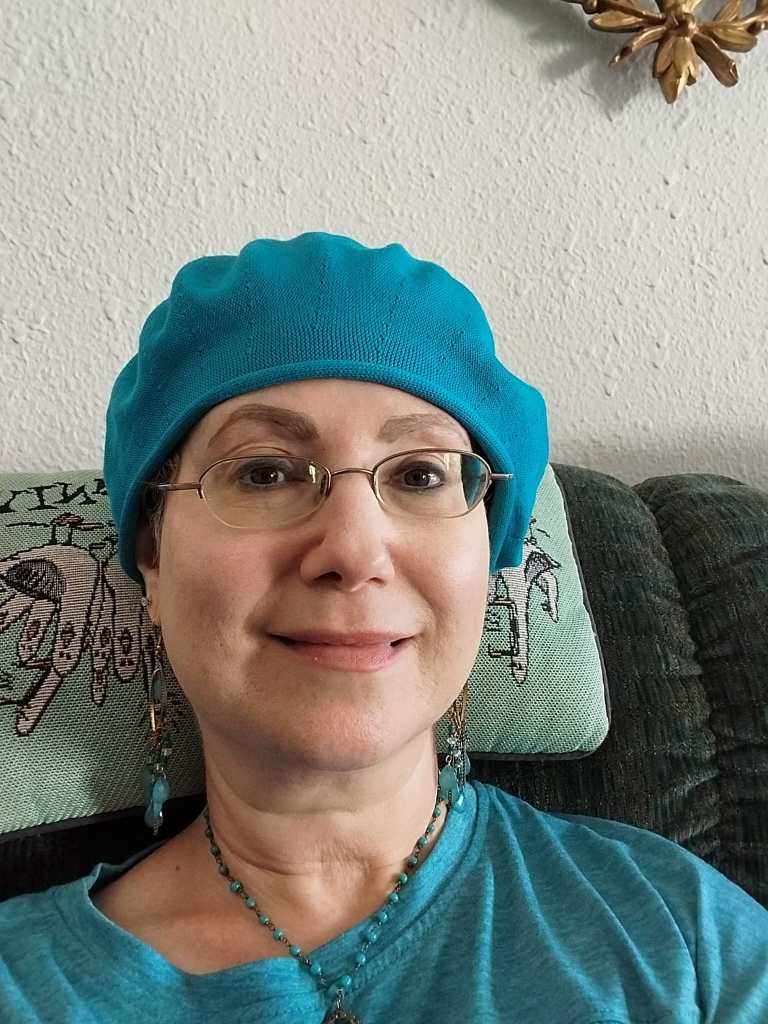
Jessica Savitt is a former dietitian and longtime teacher of English, biology, and chemistry. She made aliyah to Haifa from New Jersey by herself in 2021, intending to set up a home in Israel for when the rest of her family would hopefully want to make aliyah. She is currently working as a private English teacher in Haifa.
Her favorite activities include playing with her grandsons, going to the beach, painting sea stones, and exploring the beauty of our land. Jessica is also an inspirational speaker and writer who loves teaching fellow Jewish women to see the miracles in their lives and the beauty of our Jewish heritage.
700 Days in Captivity
As I sit here contemplating the incomprehensible fact that our hostages have been in captivity for 700 days, I am filled with both deep pain and deep pride.
The deep pain is for our brethren whom we have been unsuccessful in redeeming from their suffering and for the blindness of our brethren whose personal or political agendas have restored the division and hatred that existed prior to October 7.
Interestingly, the number 700 in gematria is equal to eretz hakodesh, the Holy Land. My pride lies in our tens of thousands of reservists who are determined to finish the job in Gaza, while our army is actively involved in multi-front military maneuvers. We know we will eventually triumph over our enemies. It is not possible that Hashem, our Father and King, will abandon us when we are so obviously close to redemption.
Meanings of Redemption
Redemption could mean many things:
- Physical: as in the redemption of the Jews from Egypt or the redemption of our hostages from Gaza.
- Psychological: as in the redemption of our hostages and our population from the trauma we have experienced.
- Spiritual: as in our redemption from our sins by way of doing teshuva.
Elul and the Call to Teshuva
It is Elul, and this is the time for redemption of the spirit through teshuva. Hashem has promised us that if we but open a hole the size of the eye of a needle, He will open for us the gates of redemption as wide as a large hall (Shir Hashirim Rabba).
Spiritual redemption is the result of hard work and serious introspection. Before we can make any change, we need to be ready to make it.
Our yetzer hara is extremely devious. It not only tempts us to sin, but after we sin, it convinces us that we cannot possibly return to stand before Hashem and confess and return to a close relationship with Him.
Those little voices that say:
- “Forget it! You are so far gone that Hashem will never accept your teshuva.”
- “Who are you anyway? You’re nothing! Not important. Your deeds could not possibly interest G-d.”
- “Elul again? Didn’t you say the same thing last year? The year before? And the year before that? How can you have the gall to stand before G-d and tell Him again that you will change?”
These voices are our yetzer hara, working overtime to stop us from attempting teshuva. The same yetzer hara also instills despair, depression, guilt, and anguish in us in a blatant effort to discourage us from rising again and from returning to our healthy, loving relationship with our Maker.
I Am My Beloved’s
It is the time of אני לדודי ודודי לי – I am my beloved’s and my beloved is mine—an acronym for Elul.
Never forget that we are Hashem’s beloved, but first and foremost, we need to show Hashem that He is ours. Only here in Eretz Hakodesh do we have a direct line to Hashem. His eyes are on us 24/7.
We have returned to our land that Hashem promised us; now we need to return to Hashem Himself, and show Him our gratitude and love for all that He has done for us.
Wishing everyone a meaningful, productive Elul and Shana Tova!
Man and Woman: How to Live and Love
Leadership and Receptivity: A Torah Foundation for Shalom Bayit Shalom Bayit is not built only on communication skills or shared values. Judaism teaches that peace in the home depends on clear roles, grounded leadership, and willing trust — emotionally, materially, and physically. In Torah language, this structure is called mashpia and mekabel — one who…

Finding My Voice: A Writer’s Journey
By Mindy Morasha Rubenstein I began this journey as a writer before I knew exactly what I was writing about. I was the “lost child” in my family, growing up in chaos, and I didn’t know how to rescue others — but I did know I had a voice. I would later discover that writing…
The Hidden Abuse No One Talks About
I don’t have any bruises or scars, so you’d never know. What actually constitutes emotional or financial abuse can be so subtle. For nearly three decades, I’ve lived in a nearly constant state of confusion, moving between being triggered by emotional abandonment and wondering if I was the one who was crazy. Maybe at times…
Neuroscience, Neshama & the Art of Jewish Healing
Refuat HaNefesh v’HaGuf — Healing the Soul and the Body רְפוּאַת הַנֶּפֶשׁ וְהַגוּף There are days when my body feels like it is carrying all the stories I never told.The exhaustion that lingers even after sleep. The sudden overwhelm that makes me forget what I was doing. The emotions that rise like waves. Living with…
Yom Kippur: Science & Spirit
higher purpose Yom Kippur is called the holiest day of the year. But what does holy really mean? In Hebrew, the word is קֹדֶשׁ (kodesh), from the root קדש which means “set apart.” Something holy is separated from the ordinary so it can be dedicated to a higher purpose. Shabbat is holy because it is…
Many Rooms, One Jewish Woman
“For this mitzvah which I gift you today is not too difficult for you, nor is it far away. It is not in heaven… But the word is very near to you, in your mouth and in your heart, so that you may do it.” (Devarim 30:11–14) The “word” is Torah, truth, and G-d’s light…
 Mindy Morasha