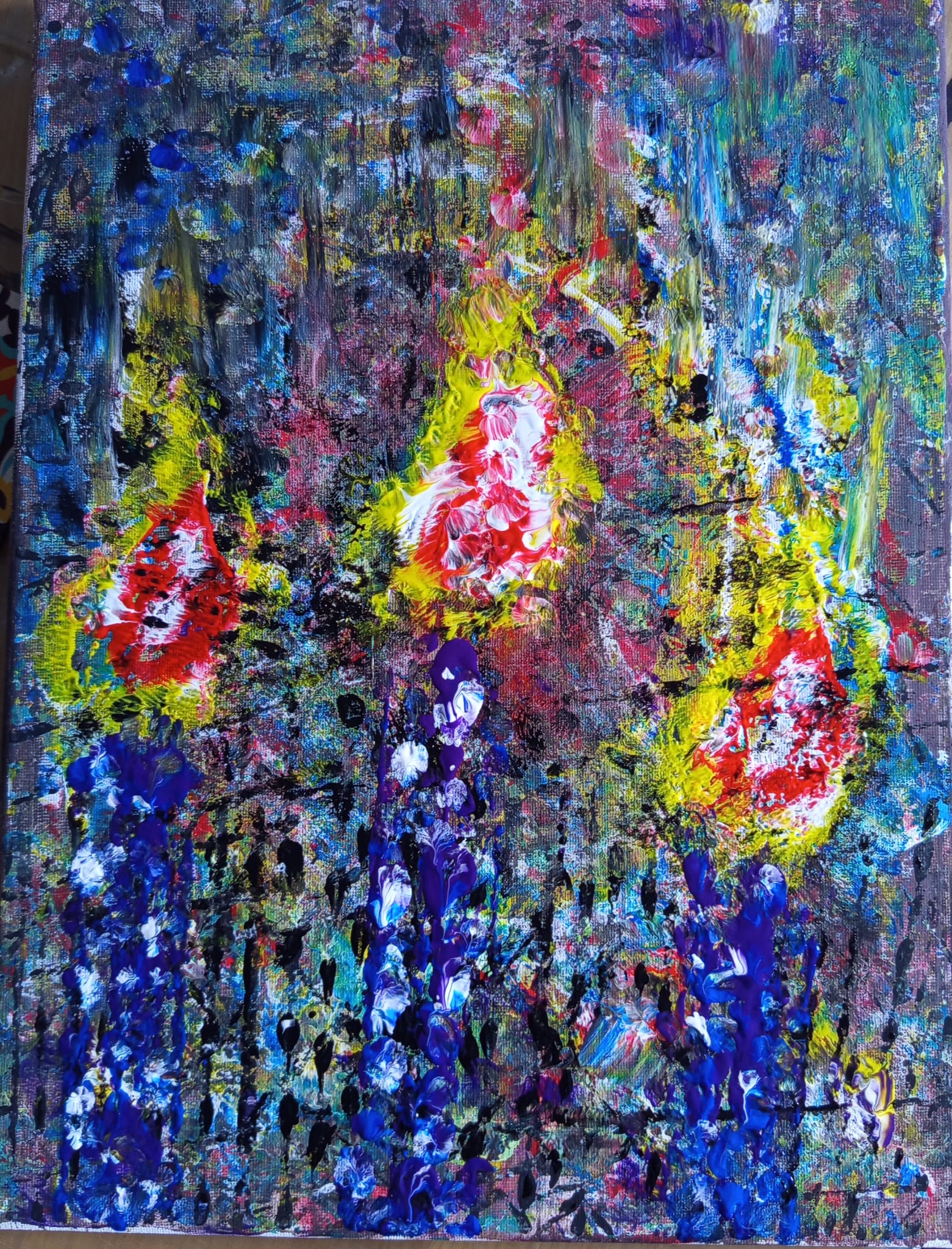

In Jewish thought, we often talk about the neshama—the soul—as a divine spark, a breath of God within us. And like God, the soul doesn’t just speak through logic or words. It whispers, nudges, and shines in quiet, often mystical ways.
You may have experienced this already: a strong gut feeling, a flash of insight, the sense that something unseen is near. These moments are often described through the language of the “clairs”—our spiritual senses.
Just as we have five physical senses, we also have spiritual ones. Here’s a closer look at the seven intuitive senses, often experienced by sensitive souls—especially those walking a path of growth, healing, and return.
1. Clairsentience – Clear Feeling
This is the ability to feel emotions, energy, or physical sensations that aren’t yours.
In Chassidic and Kabbalistic teachings, the heart is a seat of divine understanding—binah halev. Clairsentients feel deeply. They sense truth not just mentally, but bodily and emotionally.
Examples:
- Walking into a room and instantly feeling tension.
- Feeling someone’s sadness behind their smile.
- Sudden shivers or warmth, even when nothing external has changed.
2. Claircognizance – Clear Knowing
Claircognizants “just know.” The knowledge drops in like manna from above—pure, without effort.
In Jewish tradition, this is close to ruach hakodesh—a divine flow of insight. It’s not prophecy, but it’s a clear sense of truth beyond the mind’s usual limits.
Examples:
- Instantly knowing someone’s telling the truth—or not.
- Getting an answer in prayer before the question’s even formed.
- A sudden thought or warning that turns out to be accurate.
3. Clairvoyance – Clear Seeing
Clairvoyants receive information through images or visions, often in the mind’s eye.
The Zohar speaks of re’iyah pnimit—inner sight—as a way to perceive spiritual realities. These aren’t hallucinations. They’re soul messages in the language of pictures and light.
Examples:
- Seeing symbols during meditation or prayer.
- Flashing images that carry emotional weight.
- Dreams that feel prophetic or alive with meaning.
4. Clairaudience – Clear Hearing
This is the spiritual sense of hearing words, guidance, or music that others can’t.
Jewish texts often describe the experience of hearing a “bat kol,” a divine echo or voice from Heaven. It’s not always literal. Sometimes, it’s a phrase that repeats in your mind or a lyric that speaks to your soul.
Examples:
- Hearing your name softly called when no one’s there.
- A phrase drops in that feels like a message.
- Spirit or inner guides speaking in your own voice—but with deeper wisdom.
5. Clairalience – Clear Smelling
This is the ability to smell something without a physical source—often connected to memory or the presence of a soul.
Smell is one of the holiest senses in Judaism. On Havdalah, we bless the spices (besamim) to revive the soul as Shabbat departs. Our ancestors believed smell could reach where other senses couldn’t.
Examples:
- Smelling a deceased loved one’s perfume or cooking.
- Roses or incense during prayer or meditation.
- A sudden, unexplained scent that stirs emotion.
6. Clairgustance – Clear Tasting
This rare clair allows you to taste something energetically—often with symbolic meaning.
In the Psalms we read, “Ta’amu u’re’u ki tov Hashem”—“Taste and see that God is good.” Taste can be spiritual. It can awaken memory, soul connection, or even messages from the past.
Examples:
- Tasting wine, metal, or honey during a spiritual experience.
- An unexplained taste linked to someone or something meaningful.
- The “taste” of an emotion—bitterness, sweetness, yearning.
7. Clairvoyance vs. Imagination
A common question is, “Am I just making this up?”
In Jewish mysticism, imagination (dimyon) can be either ego-driven or soul-guided. Real vision, real hearing, real knowing—comes with clarity, resonance, and peace, not fear or confusion. It feels like light, not noise.
Which One Is Yours?
Most people have one or two dominant clairs, but all can be developed. When you nurture your intuition, you’re not trying to become mystical or magical. You’re listening to the still, small voice (kol demamah dakah)—the way God often speaks to the soul.
Discover Your Dominant Clair: A 5-Minute Soul Check-In
Find a quiet place, take a few slow breaths, and gently bring your awareness inward. Then, reflect on the questions below. Go with your first instinct—don’t overthink.
1. When I walk into a room or meet someone new, I often…
A. Feel the mood instantly, even if no one says a word
B. Just know things without understanding how
C. Visualize images, scenes, or colors in my mind
D. Hear a phrase, song lyric, or inner voice guiding me
2. When I pray, meditate, or reflect deeply, I usually…
A. Feel emotion or energy in my chest or body
B. Get sudden ideas or insights that feel true
C. See symbolic pictures, flashes of light, or memories
D. Hear words or messages in my head
3. When I’m near someone who’s struggling, I often…
A. Take on their feelings in my body
B. Sense something’s wrong before they speak
C. See a visual of what they’re going through
D. Hear thoughts like, “They need love” or “Say this”
Tally Your Answers
- Mostly A’s = Clairsentient (Clear Feeling)
- Mostly B’s = Claircognizant (Clear Knowing)
- Mostly C’s = Clairvoyant (Clear Seeing)
- Mostly D’s = Clairaudient (Clear Hearing)
You might have a mix—but your dominant clair is often how your soul whispers first. From a Jewish mystical lens, this whisper is sacred. It’s part of your tzelem Elokim, your Divine imprint. Honoring it is a way of listening to your soul’s partnership with God.
Final Thought
The “clairs” are not new-age fluff. They’re old as Sinai, ancient as the prophets, and as close as your own heart. When you begin to notice how your soul communicates—through feeling, knowing, seeing, hearing—you begin to live in deeper partnership with the Divine.
The world becomes not just something you walk through… but something that speaks back.
More posts …
Man and Woman: How to Live and Love
Leadership and Receptivity: A Torah Foundation for Shalom Bayit Shalom Bayit is not built only on communication skills or shared values. Judaism teaches that peace in the home depends on clear roles, grounded leadership, and willing trust — emotionally, materially, and physically. In Torah language, this structure is called mashpia and mekabel — one who…

Finding My Voice: A Writer’s Journey
By Mindy Morasha Rubenstein I began this journey as a writer before I knew exactly what I was writing about. I was the “lost child” in my family, growing up in chaos, and I didn’t know how to rescue others — but I did know I had a voice. I would later discover that writing…
The Hidden Abuse No One Talks About
I don’t have any bruises or scars, so you’d never know. What actually constitutes emotional or financial abuse can be so subtle. For nearly three decades, I’ve lived in a nearly constant state of confusion, moving between being triggered by emotional abandonment and wondering if I was the one who was crazy. Maybe at times…
Neuroscience, Neshama & the Art of Jewish Healing
Refuat HaNefesh v’HaGuf — Healing the Soul and the Body רְפוּאַת הַנֶּפֶשׁ וְהַגוּף There are days when my body feels like it is carrying all the stories I never told.The exhaustion that lingers even after sleep. The sudden overwhelm that makes me forget what I was doing. The emotions that rise like waves. Living with…
Yom Kippur: Science & Spirit
higher purpose Yom Kippur is called the holiest day of the year. But what does holy really mean? In Hebrew, the word is קֹדֶשׁ (kodesh), from the root קדש which means “set apart.” Something holy is separated from the ordinary so it can be dedicated to a higher purpose. Shabbat is holy because it is…
Many Rooms, One Jewish Woman
“For this mitzvah which I gift you today is not too difficult for you, nor is it far away. It is not in heaven… But the word is very near to you, in your mouth and in your heart, so that you may do it.” (Devarim 30:11–14) The “word” is Torah, truth, and G-d’s light…
Something went wrong. Please refresh the page and/or try again.
 Mindy Morasha
I always smell cholent when i hear certain shabbos songs. Never knew it had a name!
LikeLike