By Mindy Rubenstein

A Coffee Shop Conversation That Stuck with Me
I’m sitting across from a woman at a coffee shop in Israel. We’re here for a meeting, but her attention shifts to my sheitel.
“How are you going to handle that during the summers here?” she scoffs.
She doesn’t realize I’ve recently moved from Miami, where the heat and humidity are just as intense. Her comment stings, but I stay calm.
Toward the end of our meeting, I ask, “Why did you say that?” She pauses, then admits, “Honestly, I spent so much money on my sheitel, and now it just sits in my closet unused.”
That moment stuck with me. It reminded me how personal and nuanced the mitzvah of hair covering is—and how easy it is to project insecurities and judgements onto others.
My Journey to Hair Covering
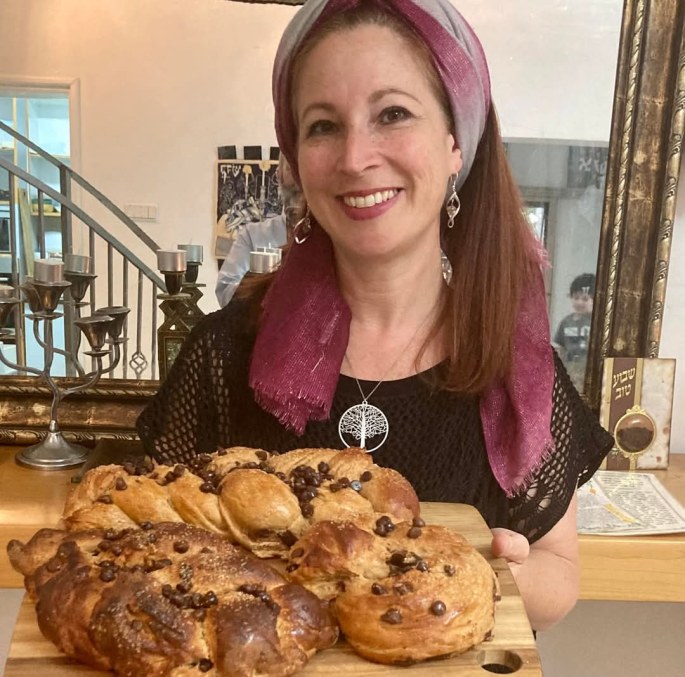
I started becoming more religiously observant at 30, already married with two kids. Now at 48, I still find hair covering to be one of the most challenging mitzvot. I’m a creative person with ADHD, and my mood or personality for the day often dictates what I choose to wear. Sometimes it’s a sheitel; other days, it’s a scarf, a beret, or a hat.
The Styles of Hair Covering in Israel
Living in Israel, I’ve noticed how different the styles are. Here, women often wear big, bold tichels that make a statement. While I admire the creativity, I don’t wear mine in the typical Israeli way. I’ve collected dozens of colorful scarves over the years and tie them in ways that feel more “me.” This process is fun, but it also has to accommodate my sensory issues and headaches.
Wearing a baseball cap is my least favorite option. I was told that it’s something American women often do, but for me, it just doesn’t feel good. Covering my hair isn’t just about modesty—it’s about feeling spiritually connected and feminine.

The Spiritual and Halachic Dimensions of Sheitels
I’ve bought my sheitels secondhand, except for the first one. That was soon after I started becoming relgious. As a journalist and columnist, I wrote about my ongoing Jewish journey for newspapers, magazines and websites. (My columns on Chabad.org. My columuns on Aish.com).
I’ve learned that wearing a sheitel carries a unique spiritual significance. The Lubavitcher Rebbe spoke passionately about the importance of women covering their hair with a sheitel, emphasizing its ability to elevate modesty and dignity to a higher level. He viewed the sheitel not only as a halachic requirement but also as a tool for bringing greater holiness into the home and the world.
Torah and Kabbalah on Hair Covering
The Torah and Kabbalah also touch on the deeper meaning of hair covering. In Numbers 5:18, the Sotah ritual highlights the sanctity of a woman’s modesty, while Kabbalistic teachings suggest that covering the hair protects and channels spiritual energy. Some even connect this idea to the crown chakra in other spiritual traditions, where covering the head symbolizes divine connection and humility.
In Jewish mysticism, the Sefirah Keter, meaning “Crown,” parallels the crown chakra as the highest point of divine connection, and hair covering symbolizes a woman’s spiritual dignity and her alignment with this divine source.
A Journey of Growth and Empowerment
There have been times, especially when I’ve felt less spiritually grounded, when I stopped covering my hair altogether. Those moments felt like stepping back, but they also brought clarity. When I returned to covering, it felt like a renewal—a chance to reconnect and grow, almost as if I was a ba’alat teshuva all over again.
Ultimately, covering my hair has been a personal and evolving journey. It’s not always easy, and I try not to judge myself—or anyone else—for inconsistencies. We all have unique paths, and this mitzvah, like so many others, is deeply personal. Whether I wear a sheitel, a tichel, or a beret, the goal is to align with my inner self and feel empowered by the choice.
—

I’m Mindy Rubenstein, a writer and spiritual coach for women and teens. Contact me for a complimentary session.
Man and Woman: How to Live and Love
Leadership and Receptivity: A Torah Foundation for Shalom Bayit Shalom Bayit is not built only on communication skills or shared values. Judaism teaches that peace in the home depends on clear roles, grounded leadership, and willing trust — emotionally, materially, and physically. In Torah language, this structure is called mashpia and mekabel — one who…

Finding My Voice: A Writer’s Journey
By Mindy Morasha Rubenstein I began this journey as a writer before I knew exactly what I was writing about. I was the “lost child” in my family, growing up in chaos, and I didn’t know how to rescue others — but I did know I had a voice. I would later discover that writing…
The Hidden Abuse No One Talks About
I don’t have any bruises or scars, so you’d never know. What actually constitutes emotional or financial abuse can be so subtle. For nearly three decades, I’ve lived in a nearly constant state of confusion, moving between being triggered by emotional abandonment and wondering if I was the one who was crazy. Maybe at times…
Neuroscience, Neshama & the Art of Jewish Healing
Refuat HaNefesh v’HaGuf — Healing the Soul and the Body רְפוּאַת הַנֶּפֶשׁ וְהַגוּף There are days when my body feels like it is carrying all the stories I never told.The exhaustion that lingers even after sleep. The sudden overwhelm that makes me forget what I was doing. The emotions that rise like waves. Living with…
Yom Kippur: Science & Spirit
higher purpose Yom Kippur is called the holiest day of the year. But what does holy really mean? In Hebrew, the word is קֹדֶשׁ (kodesh), from the root קדש which means “set apart.” Something holy is separated from the ordinary so it can be dedicated to a higher purpose. Shabbat is holy because it is…
Many Rooms, One Jewish Woman
“For this mitzvah which I gift you today is not too difficult for you, nor is it far away. It is not in heaven… But the word is very near to you, in your mouth and in your heart, so that you may do it.” (Devarim 30:11–14) The “word” is Torah, truth, and G-d’s light…
Rosh Hashanah Is Not the Real New Year
Here in Eretz Yisrael, as the heavy heat of summer finally eases, you can feel the season shifting. The nights cool, the air softens, and the earth prepares for rain. Grapes and figs have been harvested, the balance of the equinox arrives, and a new moon rises in the autumn sky. This is not the…
Reframing Rosh Hashanah: From Judgment to Renewal
For women in recovery, the language of guilt and judgment is familiar — and often toxic. But real healing doesn’t come from shame. It comes from connecting with a Higher Power and living from our higher self. That’s the essence of recovery, and it can also be the essence of this season if we choose…
Apples, Honey, and the Feminine Breath of Life
Rosh Hashanah begins with food that is also prayer. We dip apples into honey, we bake round challot, we place pomegranates on the table. These are not just traditions but symbols of what we long for in the year ahead. The word that threads through it all is חיים – Chayim – Life. Why Apples…
Redemption, Teshuva, and the Month of Elul
By Jessica Savitt Jessica Savitt is a former dietitian and longtime teacher of English, biology, and chemistry. She made aliyah to Haifa from New Jersey by herself in 2021, intending to set up a home in Israel for when the rest of her family would hopefully want to make aliyah. She is currently working as…
Women of Aliyah: A Journey of Support and Connection
By Mindy Rubenstein, M.A. Three years ago, my family and I made Aliyah from Florida. While the journey is full of blessings, there were and continue to be challenges and moments that test our strength. This week, my son began his army service, a milestone that reminded me as a Jewish mom just how deeply…
The Fire Between Man and Woman — How to Keep It Holy
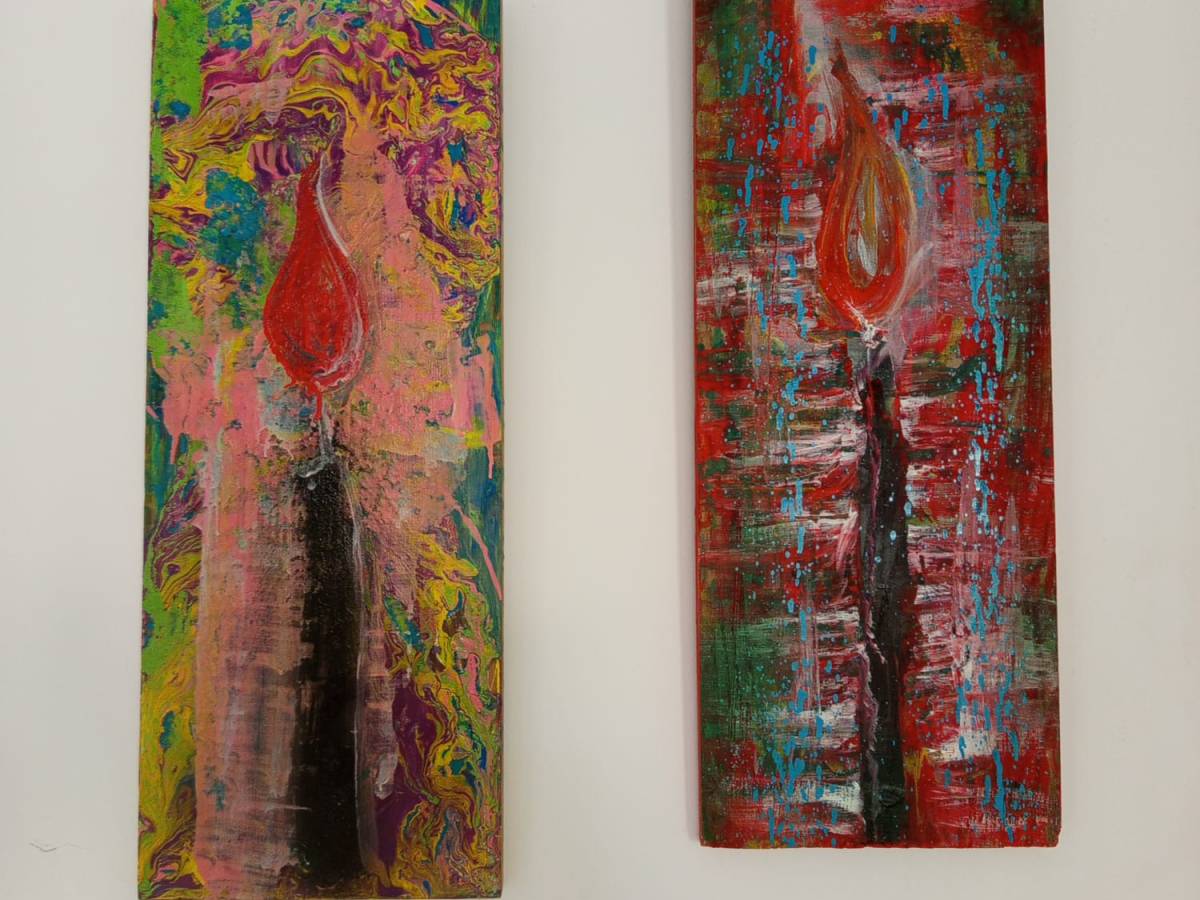
In Hebrew, the words for man and woman are full of meaning: אִישׁ (Ish – Man) אִשָּׁה (Ishah – Woman) Both share the letters א (Aleph) and ש (Shin). These two letters form the word אֵשׁ (Esh – Fire). But each has one extra letter: Man has י (Yud) Woman has ה (Hey) Together, י…
 Mindy Morasha