Rosh Hashanah begins with food that is also prayer. We dip apples into honey, we bake round challot, we place pomegranates on the table. These are not just traditions but symbols of what we long for in the year ahead.
The word that threads through it all is חיים – Chayim – Life.

Why Apples and Honey?
The Zohar calls Gan Eden “the field of holy apples.” Apples symbolize the freshness of creation and the soul’s natural delight. They remind us that underneath all layers, there is something good in us that can always be renewed.
Honey comes from the bee, a creature that itself is not kosher, yet the honey it produces is pure and sweet.
This is mysticism in the kitchen: even from struggle, sweetness can emerge. Honey is teshuvah, the return and transformation of bitterness into blessing.
Together, apple and honey express the essence of Rosh Hashanah: we pray not only for survival, but for a life where even our hardest experiences can be turned into sweetness.
חיים – Life in Plural
The Torah says, “I have set before you life and death… choose life” (Devarim 30:19). On Rosh Hashanah, we don’t just ask for life—we choose it.
The Hebrew word Chayim is always plural. Life is never solitary. It includes body and soul, joy and struggle, the woman I am today and the inner child still inside me. It includes the children who have left home and those still here.
Recovery has taught me this too. Step by step, I learn that real life, Chayim, is not just about staying alive. It is about living in connection: with my Higher Power, with others, with the little girl in me who still longs to be safe.
Recovery and Renewal
The old year departs. A new year begins. The 12-step path describes the same rhythm: surrendering the old self and becoming willing to receive new life. One day at a time, one prayer at a time, I invite vitality back in.
זָכְרֵנוּ לְחַיִּים מֶלֶךְ חָפֵץ בַּחַיִּים וְכָתְבֵנוּ בְּסֵפֶר הַחַיִּים לְמַעַנְךָ אֱלֹקִים חַיִּים
Zochreinu l’Chayim, Melech chafetz ba’Chayim, v’chatveinu b’Sefer haChayim, l’ma’ancha Elokim Chayim.
“Remember us for life, King Who desires life, and inscribe us in the Book of Life—for Your sake, Living G-d.”
When I say “Zochreinu l’Chayim,” I am also saying:
Let me live clean, honest, and free.
Let my words and thoughts create blessing.
Let me bring sweetness to places that once were bitter.
And sometimes, it sounds like this:
“God, grant me the serenity to accept the people I cannot change,
the courage to change the one I can,
and the wisdom to know that one is me.”
A Feminine Prayer for Chayim
“Write me in the Sefer HaChayim—for a year of vitality, sweetness, and renewal. For my children. For the child inside me who still needs gentleness. For all who are searching for healing. For life that is whole.”
A Recipe of Sweetness
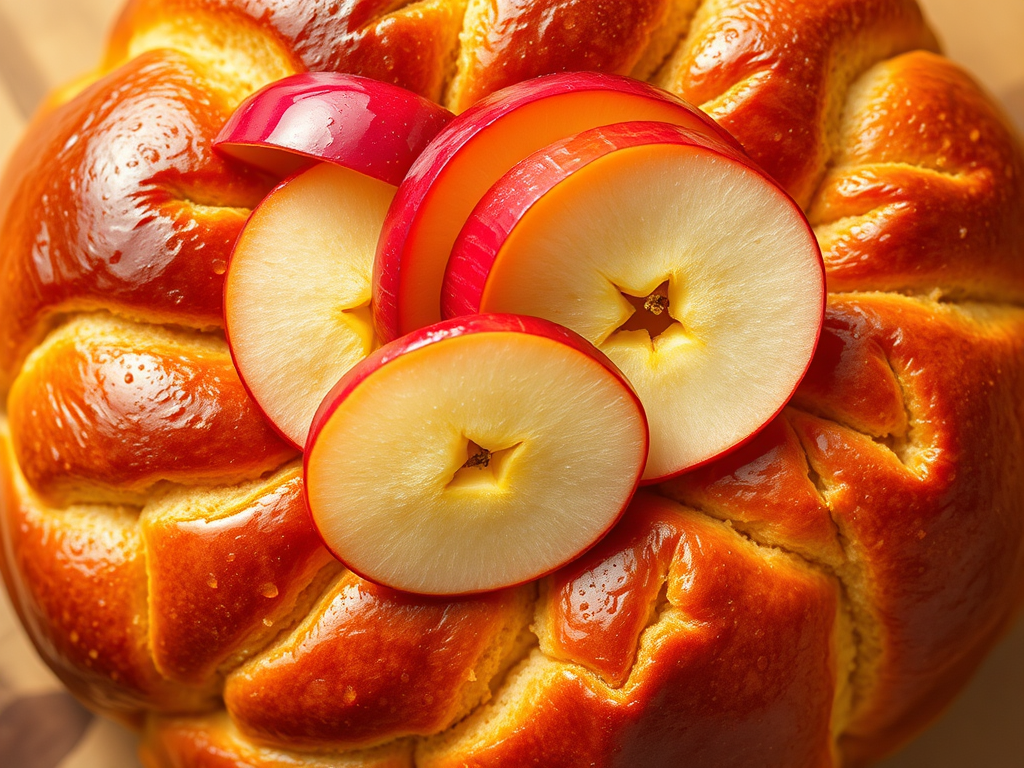
Apple and Honey Challah with Pomegranate
Ingredients
- 1 batch of challah dough
- 2 apples, peeled and diced
- 2 tablespoons honey
- 1 teaspoon cinnamon
- Seeds of 1 pomegranate
Instructions
- Prepare your challah dough and let it rise.
- Toss diced apples with honey and cinnamon.
- Roll out the dough, spread the apple mixture, and braid into a round challah.
- Bake at 180°C / 350°F until golden.
- Once cooled slightly, sprinkle with fresh pomegranate seeds.
Choosing Life
Rosh Hashanah and recovery both ask the same question: will you choose life?
Not just existence, but Chayim, life in plural, life in connection, life where sweetness can be drawn even from bitterness.
Life where the Shechinah breathes renewal into the broken places and makes them whole.
Step by step, prayer by prayer, breath by breath, I choose life.
Man and Woman: How to Live and Love
Leadership and Receptivity: A Torah Foundation for Shalom Bayit Shalom Bayit is not built only on communication skills or shared values. Judaism teaches that peace in the home depends on clear roles, grounded leadership, and willing trust — emotionally, materially, and physically. In Torah language, this structure is called mashpia and mekabel — one who…
Finding My Voice: A Writer’s Journey
By Mindy Morasha Rubenstein I began this journey as a writer before I knew exactly what I was writing about. I was the “lost child” in my family, growing up in chaos, and I didn’t know how to rescue others — but I did know I had a voice. I would later discover that writing…
The Hidden Abuse No One Talks About
I don’t have any bruises or scars, so you’d never know. What actually constitutes emotional or financial abuse can be so subtle. For nearly three decades, I’ve lived in a nearly constant state of confusion, moving between being triggered by emotional abandonment and wondering if I was the one who was crazy. Maybe at times…
 Mindy Morasha