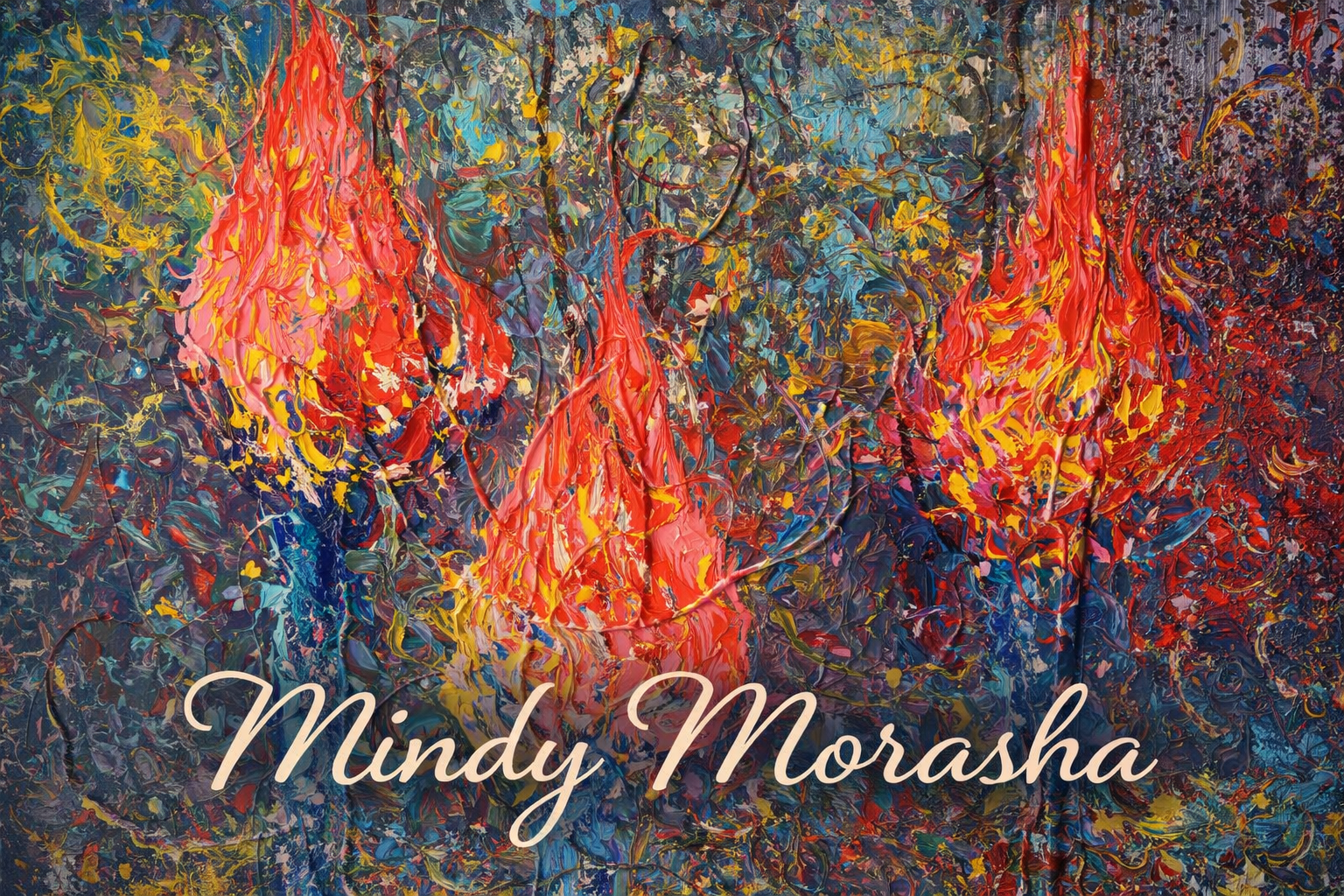
I’ve always been sensitive to my environment—light, sound, energy, and especially color.
For a long time, that sensitivity felt like too much. But over time, I’ve come to see it as one of my greatest tools for healing, connection, and creativity.
Color is part of how I regulate, express, and reconnect—with myself, with others, and with something higher.
It shows up in my clothing, my home, my healing art, and in how I support my children and students. I’ve learned to notice what colors I’m drawn to—or avoiding—and to listen.
Color has become an intuitive guide, helping me respond to my emotional and spiritual needs in subtle but powerful ways.
But this connection to color isn’t just modern or personal. It’s also deeply Jewish.
Color in the Torah: A Sacred Language
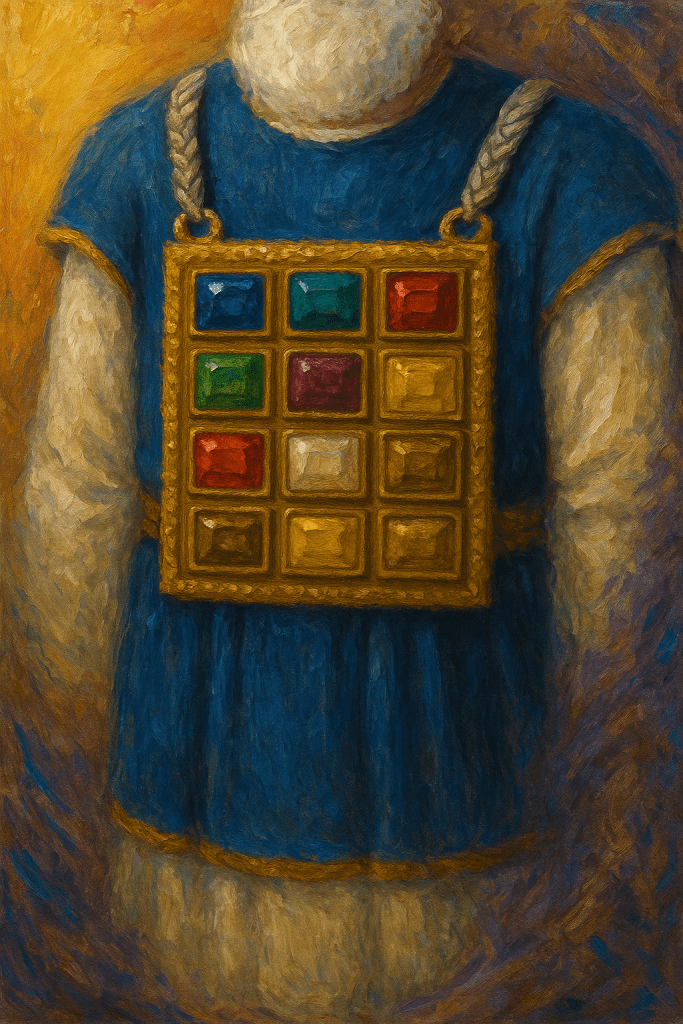
In the Torah, color plays a holy role. When God instructs the Israelites to build the Mishkan (Tabernacle), the sacred space where Divine presence would dwell, the materials are rich with meaning. The coverings, curtains, and priestly garments are described in exact detail—including the use of specific colors:
- 💙 Techelet (Sky Blue) – Made from a rare dye, this color was woven into tzitzit (fringes) and the High Priest’s garments. The Talmud teaches that looking at techelet reminds us of the sea, then the sky, and then the Throne of Glory—inviting awe and spiritual alignment.
- 💜 Argaman (Purple) – Associated with royalty and mystery. In Kabbalistic thought, purple symbolizes hidden wisdom and the elevated realms.
- ❤️ Tola’at Shani (Crimson/Scarlet) – Often connected to blood and life-force, this vibrant red represents vitality, purification, and teshuvah (return).
- 🤍 White (Linen) – A symbol of simplicity, purity, and clarity. White reflects spiritual transparency and the desire to align with truth.
- 🤎 Gold & Copper – Used in sacred vessels and garments, these metals ground the spiritual into the material, reminding us to honor beauty and holiness in the physical world.
These colors weren’t chosen for aesthetic alone. They reflect the inner emotional and spiritual states of the soul, woven into the fabric of sacred service.
Kabbalah and the Energetics of Color
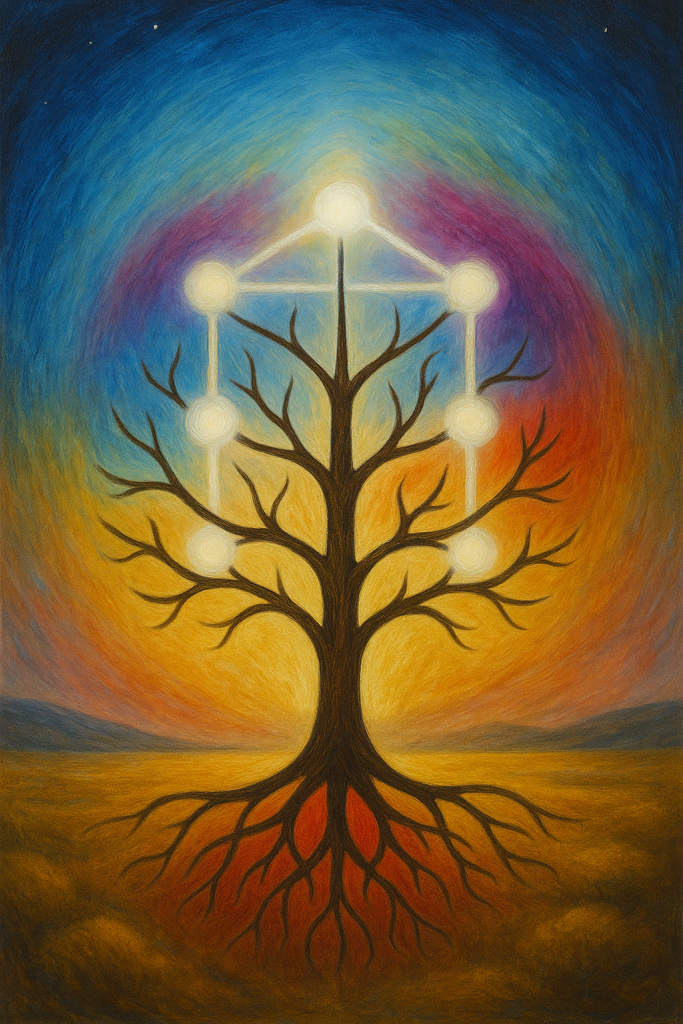
In Kabbalah, the mystical tradition of Judaism, color is linked to the sefirot—the energetic channels through which Divine light flows into creation. Each sefirah (like Chesed for kindness, or Gevurah for strength) has its own color association, symbolizing a specific Divine quality.
Colors, in this view, are not just seen—they’re felt, spiritually and emotionally. They can shift our energy, open the heart, and realign us with God, our purpose, or simply a deeper part of ourselves.
When we wear a color, live with it, paint with it, or feel drawn to it—it may be more than personal preference. It could be the soul seeking what it needs.
Color as a Tool for Presence and Return
For me, working with color has become a practice of returning—to balance, to clarity, to God, and to myself.
It’s a way to bring more presence into how I live, dress, create, and relate to others. I don’t practice “color therapy” in a clinical sense, but I live it. I feel it. I honor it.
And I see how color helps those I guide—my children, my students—find emotional safety, expression, and connection.
Your Color Story
If you’ve ever craved certain colors during a life transition, or felt comforted or activated by a particular shade, you’re not alone. There may be deeper wisdom in that pull.
Have you noticed what colors help you feel calmer, clearer, or more connected? I’d love to hear how color speaks to you.
#ColorTherapy #JewishWisdom #TorahAndColor #Kabbalah #CreativeHealing #IntentionalLiving #SpiritualMotherhood #HealingArt #EmotionsAsEnergy
Man and Woman: How to Live and Love
Leadership and Receptivity: A Torah Foundation for Shalom Bayit Shalom Bayit is not built only on communication skills or shared values. Judaism teaches that peace in the home depends on clear roles, grounded leadership, and willing trust — emotionally, materially, and physically. In Torah language, this structure is called mashpia and mekabel — one who…

Finding My Voice: A Writer’s Journey
By Mindy Morasha Rubenstein I began this journey as a writer before I knew exactly what I was writing about. I was the “lost child” in my family, growing up in chaos, and I didn’t know how to rescue others — but I did know I had a voice. I would later discover that writing…
The Hidden Abuse No One Talks About
I don’t have any bruises or scars, so you’d never know. What actually constitutes emotional or financial abuse can be so subtle. For nearly three decades, I’ve lived in a nearly constant state of confusion, moving between being triggered by emotional abandonment and wondering if I was the one who was crazy. Maybe at times…
Neuroscience, Neshama & the Art of Jewish Healing
Refuat HaNefesh v’HaGuf — Healing the Soul and the Body רְפוּאַת הַנֶּפֶשׁ וְהַגוּף There are days when my body feels like it is carrying all the stories I never told.The exhaustion that lingers even after sleep. The sudden overwhelm that makes me forget what I was doing. The emotions that rise like waves. Living with…
Yom Kippur: Science & Spirit
higher purpose Yom Kippur is called the holiest day of the year. But what does holy really mean? In Hebrew, the word is קֹדֶשׁ (kodesh), from the root קדש which means “set apart.” Something holy is separated from the ordinary so it can be dedicated to a higher purpose. Shabbat is holy because it is…
Many Rooms, One Jewish Woman
“For this mitzvah which I gift you today is not too difficult for you, nor is it far away. It is not in heaven… But the word is very near to you, in your mouth and in your heart, so that you may do it.” (Devarim 30:11–14) The “word” is Torah, truth, and G-d’s light…
Something went wrong. Please refresh the page and/or try again.
 Mindy Morasha