New מקום (Makom), New מזל (Mazel)
(A saying in Israel, signifying that a new space brings new blessings and good fortune.)
It’s 16:24 here in Eretz Yisrael. The late afternoon light bathes everything in gold as the sun dips behind the building across the way. My first sunset here in my new office. And if I turn my head to the left away from my desk, I can see it over the red roofs of these old buildings. The one I sit in was the first hotel here in Zichron Yaakov, built in the 1800s. There’s something magical about being in a place with so much history—I make a mental note to learn more about it. Suddenly I feel my hands and fingers moving, and I feel such relief that maybe this space does really have good energy and I have the power to write.
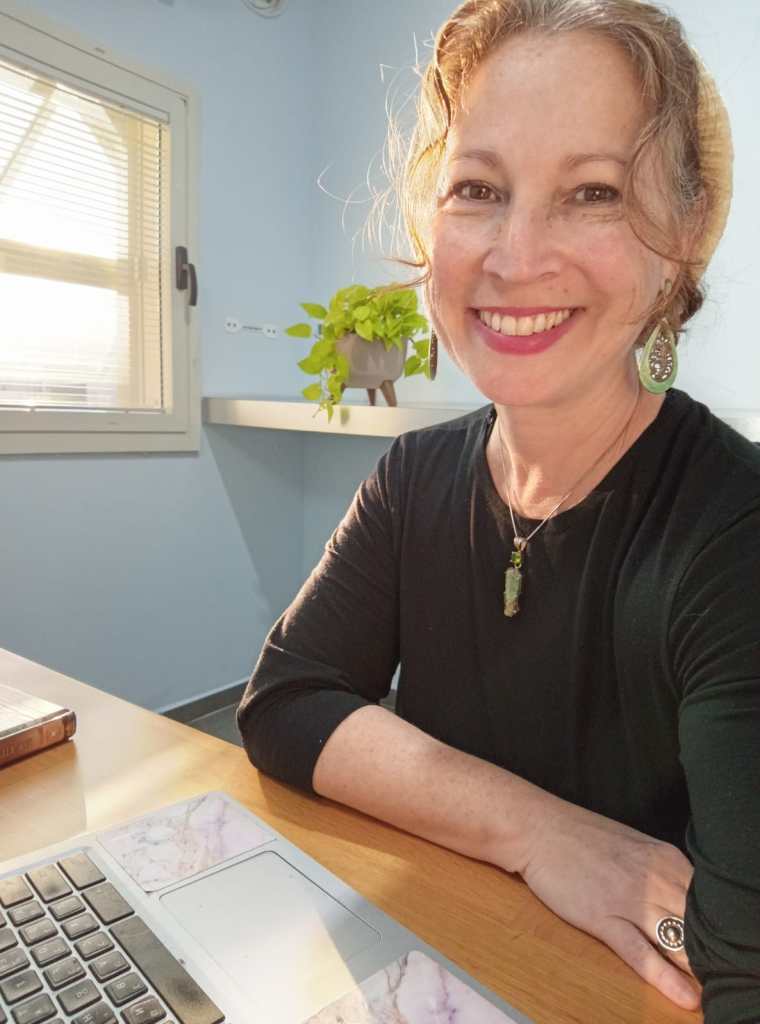
It’s been 28 months since I made aliyah from Florida. As I try to grasp that, I turn again to look at the sun. It’s my anchor. I’m down here in this world, in this place. I look down at my hands and see my mom’s ring on my left hand. And I see freckles, many more than I remember having—or maybe I just haven’t looked down at my hands in a long time.
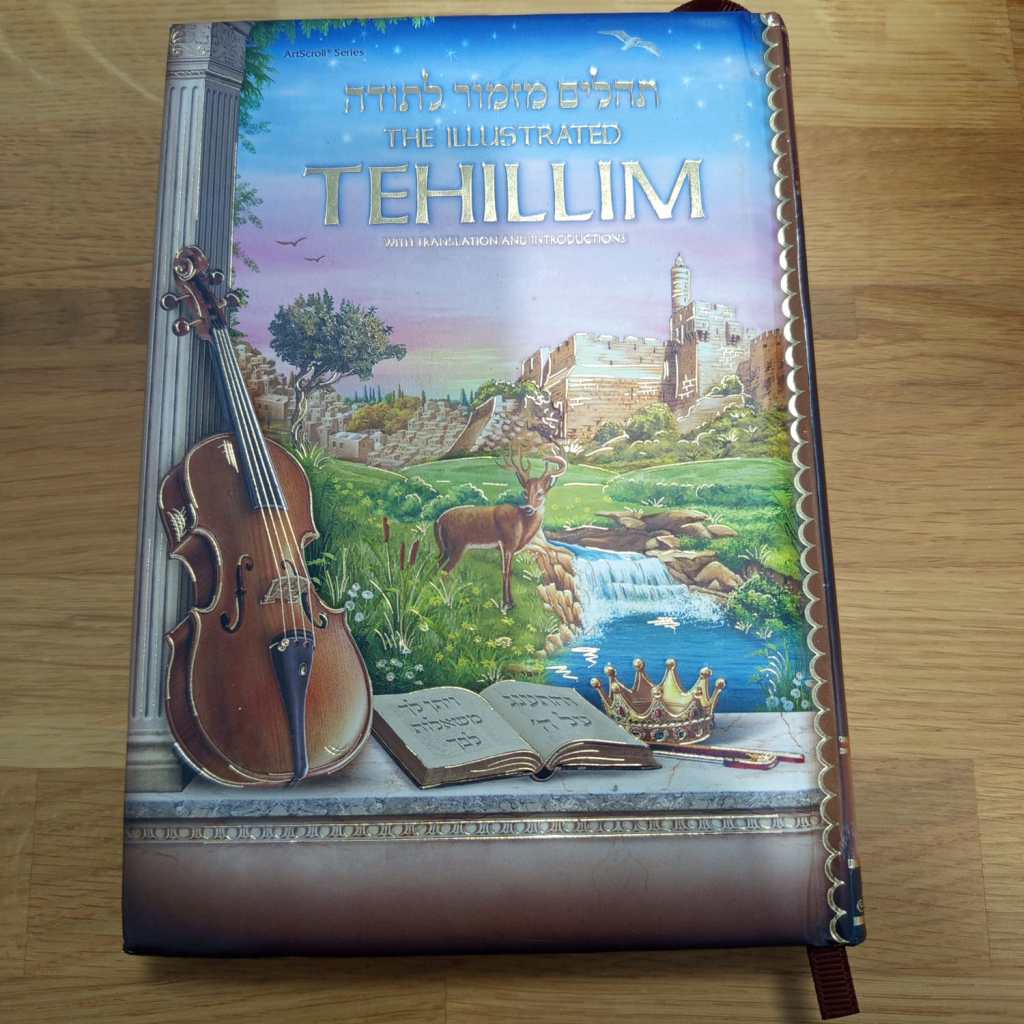
Next to me is an illustrated book of Tehillim. They were gifts for the guests at Dalia’s Bat Mitzvah. Holy words. The cover is embossed in gold with an image of the Beit Hamikdash and grass and a stream, a deer, an open book, a crown, and a musical instrument—a violin, maybe. Today when listening to classical music, I switched the song when the violin came on. I prefer piano.
Now I notice that the book’s cover has a sunset of blue and pink. It almost looks like the sunset I’m watching. G-d likes to give me little winks—small moments of beauty or connection that feel divinely orchestrated—and I so love catching them. To even explain them is almost impossible, but they happen all the time.
Earlier today Danny dropped off a plant as a gift. My mom also mentioned I should get a plant. I pray I can keep it alive. I have faith I can do it.
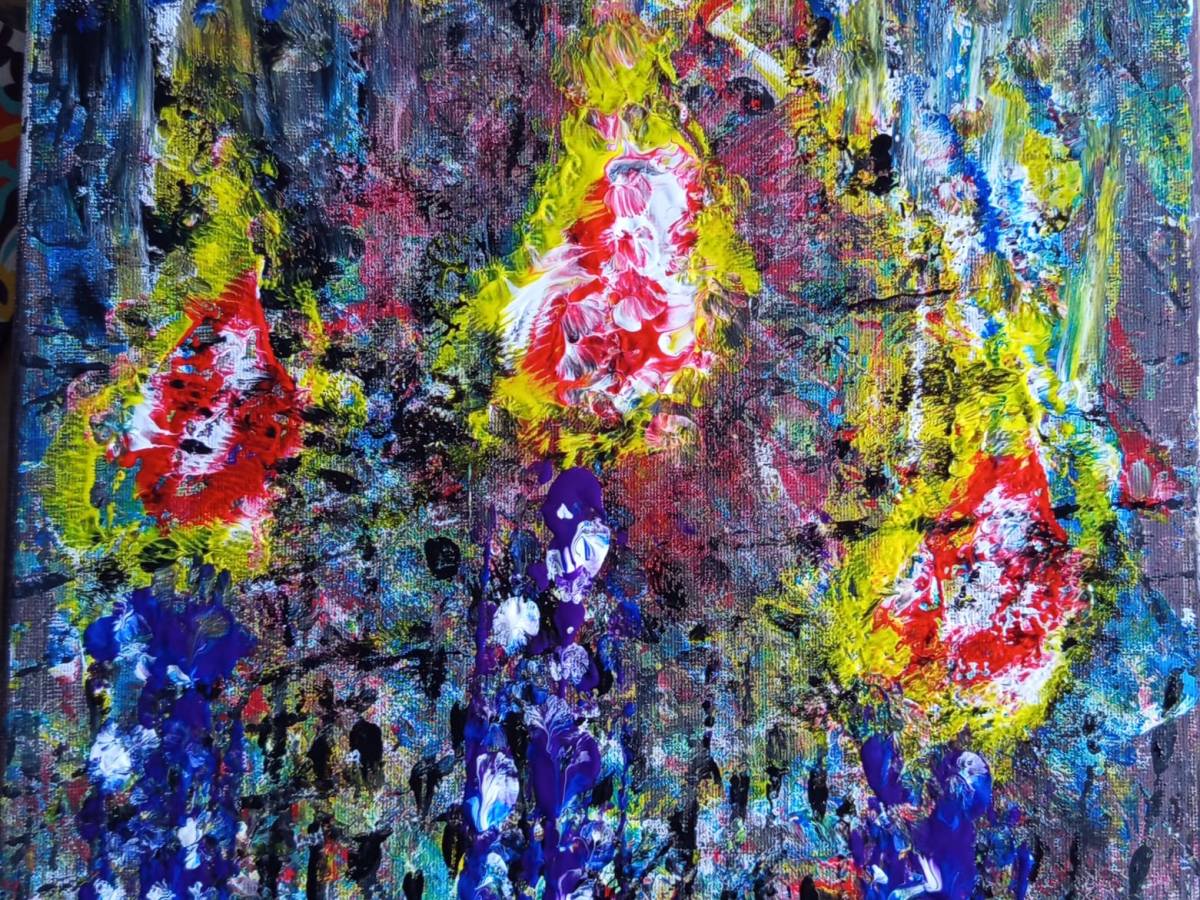
I’m getting hungry now and take a sip of water from the bottle I brought. It’s purple and pink, like one of my pour paintings. I think I actually brought this with me from America. The laptop I’m writing on also came along in my suitcase, along with the book of Tehillim. So far, that’s all I have here in this office, and it’s wonderful. No distractions, nothing to clean.
The floor has intricate designs of blue and grey. Each pattern feels like its own story, waiting to be noticed, but not now. The walls are blue and match the tile. There are dry erase boards and framed art, photos taken by the owner of a mountain in Utah. He’s Israeli and loves America. Ten generations his family has been here. My first time in Israel was the day I made aliyah. People find that hard to believe.
The office itself is actually a mamad—an indoor reinforced room used in case of rocket attacks. The word mamad has become a regular part of my vocabulary since the war started. We have spent a good amount of time within them at our house here in Zichron during sirens, but the feelings I have are good ones. It’s family time as we all come together there, even our pets.

Today I attended a Torah class with some women here. We talked about the weekly parsha, Bo, and about miracles. During the Exodus from Egypt, miracles were undeniable—clear, divine interventions. But everything is a miracle once you start to notice. My breath, my heart beating, my brain sending thoughts that allow my fingers to make words. I’ve come to see that G-d likes to leave traces of His presence everywhere. I am a vessel. We are all vessels.
I adjust in my chair that’s a bit too big for me, sitting behind a big, beautiful wood desk that I pray will soon be surrounded with women and teens. I love my alone time writing, but I also love putting art supplies in front of people and watching them relax into the process. That I have this space is a miracle. I worked hard tutoring to save up the money to pay for the first month’s rent and the realtor’s fee.

Ledicia, my realtor, is originally from France and made Aliyah. We’ve had coffee together a few times, and I feel that G-d sent her to me.
I am trusting that Hashem will allow me to continue using this space for good and that I will continue to love myself enough to allow it to happen.
That has been my mission the past few years—learning to love myself unconditionally and recognizing that my Higher Power loves me unconditionally. Even when I don’t feel it, I simply ask for help. G-d has messengers all around us—human and divine. We are messengers, too. Realizing that changes everything.
The sun is no longer visible and my stomach is growling. This is my sixth day off gluten, and I’m a few weeks into my fitness routine with my personal trainer, Nurit, who made Aliyah from Canada. She’s in her 60s and was a professional bodybuilder. She’s also a therapist. I’m grateful for the strength and support I’m building, one step at a time.
Today is a good day, but not all of them are. On Shabbat I was really struggling with an emotional pain so deep it swept me away. But maybe that’s part of the process. In my recovery program, they say pain is a gateway to G-d, and I feel that truth deeply.
I look around my office again and know that I need to wrap up and go get food, get back to my family at home. There are two chairs across from me. I imagine people sitting there, looking to me for guidance, and I feel my heart fill with purpose. Nurit is teaching me to believe in myself, to know my value.
My hands have great power. At age nine, I put them onto my Grandpa’s arthritic legs and tried to heal him, to ease his pain. That’s around the same age I started having conversations with G-d in my walk-in closet.

Even just closing my eyes and saying the Mishaberach prayer with Miriam helped her. She asked if I could do that with her next time she’s hurting. And this morning I put my hands onto Danny’s head with peppermint oil and helped the ache go away. He asked me what it took me so long to start healing people. His words moved through me, leaving a warmth and reassurance. I lingered in that feeling.
It hurts me when others hurt. I feel everything—the sounds, the lights, even the presence of the objects near me. I’m so grateful the sensitivity seems to have a good purpose.
My journey has been one of transformation—going from hurting to healing to helping.
Together with Danny, it seems the power is even greater. He healed his mother by praying and saying Tehillim. When she returned to her doctor, he was baffled.
This exploration of healing feels like uncharted territory, full of potential. I’ll write more soon.
“ה׳ רֹפֶא לִשְׁבוּרֵי לֵב וּמְחַבֵּשׁ לְעַצְּבוֹתָם”
“Hashem heals the brokenhearted and binds up their wounds.”
— Tehillim 147:3


Man and Woman: How to Live and Love
Leadership and Receptivity: A Torah Foundation for Shalom Bayit Shalom Bayit is not built only on communication skills or shared values. Judaism teaches that peace in the home depends on clear roles, grounded leadership, and willing trust — emotionally, materially, and physically. In Torah language, this structure is called mashpia and mekabel — one who gives direction and one who receives and brings it to life. Modern language sometimes calls this…
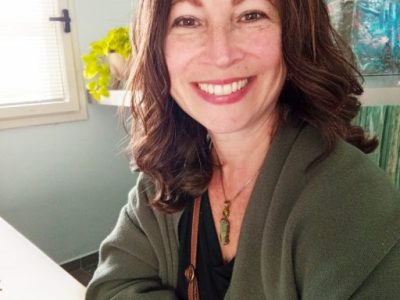
Finding My Voice: A Writer’s Journey
By Mindy Morasha Rubenstein I began this journey as a writer before I knew exactly what I was writing about. I was the “lost child” in my family, growing up in chaos, and I didn’t know how to rescue others — but I did know I had a voice. I would later discover that writing could become one of the ways I rescued myself.Now, I live in Israel and stand between…
The Hidden Abuse No One Talks About
I don’t have any bruises or scars, so you’d never know. What actually constitutes emotional or financial abuse can be so subtle. For nearly three decades, I’ve lived in a nearly constant state of confusion, moving between being triggered by emotional abandonment and wondering if I was the one who was crazy. Maybe at times I was. But through it all, I kept trying as a woman and as a mother…
Neuroscience, Neshama & the Art of Jewish Healing
Refuat HaNefesh v’HaGuf — Healing the Soul and the Body רְפוּאַת הַנֶּפֶשׁ וְהַגוּף There are days when my body feels like it is carrying all the stories I never told.The exhaustion that lingers even after sleep. The sudden overwhelm that makes me forget what I was doing. The emotions that rise like waves. Living with ADHD, CPTSD, and now perimenopause has taught me that healing is not a straight line. It…
Yom Kippur: Science & Spirit
higher purpose Yom Kippur is called the holiest day of the year. But what does holy really mean? In Hebrew, the word is קֹדֶשׁ (kodesh), from the root קדש which means “set apart.” Something holy is separated from the ordinary so it can be dedicated to a higher purpose. Shabbat is holy because it is set apart from the six weekdays. The Torah is holy because it is set apart from…
Many Rooms, One Jewish Woman
“For this mitzvah which I gift you today is not too difficult for you, nor is it far away. It is not in heaven… But the word is very near to you, in your mouth and in your heart, so that you may do it.” (Devarim 30:11–14) The “word” is Torah, truth, and G-d’s light already placed inside us. Yom Kippur reminds us we don’t need to reach far; it’s already…
Rosh Hashanah Is Not the Real New Year
Here in Eretz Yisrael, as the heavy heat of summer finally eases, you can feel the season shifting. The nights cool, the air softens, and the earth prepares for rain. Grapes and figs have been harvested, the balance of the equinox arrives, and a new moon rises in the autumn sky. This is not the beginning of the year. It is the turning of the cycle. And yet we are told…
Reframing Rosh Hashanah: From Judgment to Renewal
For women in recovery, the language of guilt and judgment is familiar — and often toxic. But real healing doesn’t come from shame. It comes from connecting with a Higher Power and living from our higher self. That’s the essence of recovery, and it can also be the essence of this season if we choose to see it differently. We’ve been told that Rosh Hashanah is “the Jewish New Year.” But…
Apples, Honey, and the Feminine Breath of Life
Rosh Hashanah begins with food that is also prayer. We dip apples into honey, we bake round challot, we place pomegranates on the table. These are not just traditions but symbols of what we long for in the year ahead. The word that threads through it all is חיים – Chayim – Life. Why Apples and Honey? The Zohar calls Gan Eden “the field of holy apples.” Apples symbolize the freshness…
 Mindy Morasha